
Lifting weights: what resistance training does for your body
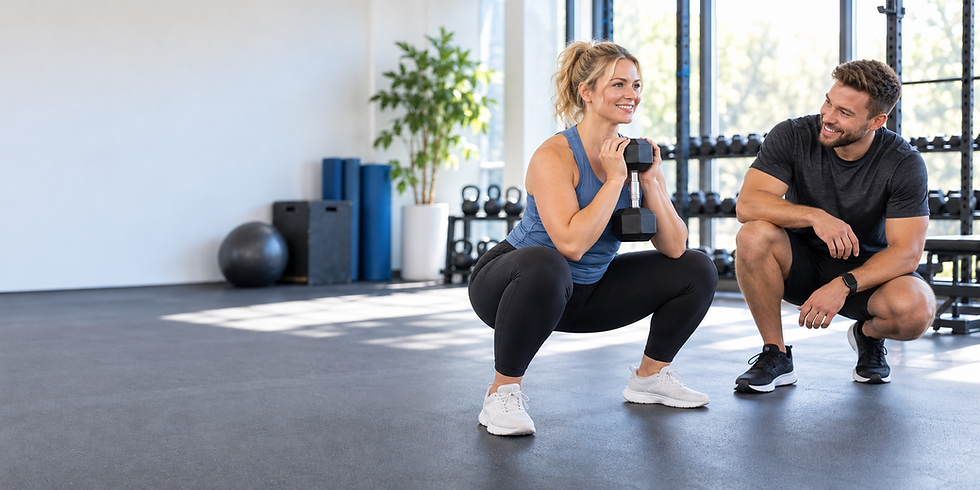
Resistance training means asking your muscles to work against resistance—such as weights, machines, resistance bands or your own body weight. It is not reserved for athletes. When it is matched to your experience and progressed gradually, it can make everyday activities feel more capable.
What happens when you lift?
During a set of lifting, a muscle repeatedly produces force. With regular practice, the body adapts: muscles can become stronger and larger, and tasks such as standing from a chair, climbing stairs or carrying groceries can feel easier. Research also finds improvements in muscle power and several measures of physical function compared with no resistance training.
You do not have to lift the heaviest weight in the room to benefit. Different equipment and training styles can work. The most useful plan is one you can perform safely, with good technique, and repeat consistently.
A simple way to plan: the FITT principles
FITT gives you four practical levers for building a resistance-training routine.
FITT element | What it means | A sensible starting point |
|---|---|---|
Frequency | How often you train | Aim for at least two sessions a week, with rest between sessions for the same muscles. |
Intensity | How challenging a set feels | Choose a load that feels challenging by the end of the set while you can still keep good form. Lighter weights, bands and body weight all count. |
Time | How much work you do | Start with a short session that fits your day. One or more controlled sets per exercise is a practical entry point; add work gradually as you become comfortable. |
Type | The exercises and equipment you choose | Include movements for the major muscle groups: legs, hips, back, chest, shoulders, arms and trunk. Machines, free weights, bands and body-weight exercises are all options. |
How to make it effective
Start with movements you can control, such as a sit-to-stand, wall push-up, band row, step-up or supported squat. Focus on a smooth, comfortable range of motion and steady breathing. It is normal for the last few repetitions to feel like work; sharp pain, dizziness or loss of control is a sign to stop.
As the routine becomes easier, progress just one variable at a time: a little more resistance, another repetition, an additional set, or a slightly more demanding variation. This gradual progression gives your body time to adapt.
What the research says
A 2026 American College of Sports Medicine overview of 137 systematic reviews found that resistance training improves strength, muscle size, power and several physical-function tests in healthy adults. Its broad recommendation is high-effort training that engages all major muscle groups at least twice weekly.
A large 2023 systematic review and network meta-analysis likewise found that all examined resistance-training prescriptions improved strength and muscle growth compared with no exercise. In other words, there is room to choose an approach that suits your preferences and equipment.
Safety first
If you are new to exercise, have a health condition, are pregnant, have recently had surgery, or experience pain with movement, seek individual guidance from your doctor, physiotherapist or accredited exercise professional. Good coaching can help you choose safe exercise variations and technique.
Resistance training is not about chasing exhaustion. It is about building a repeatable practice that leaves you stronger for the life you want to live.
Journal references
Kraemer WJ, et al. American College of Sports Medicine Position Stand. Resistance Training Prescription for Muscle Function, Hypertrophy, and Physical Performance in Healthy Adults: An Overview of Reviews. Medicine & Science in Sports & Exercise. 2026. doi:10.1249/MSS.0000000000003897. https://pubmed.ncbi.nlm.nih.gov/41843416/
Currier BS, et al. Resistance training prescription for muscle strength and hypertrophy in healthy adults: a systematic review and Bayesian network meta-analysis. British Journal of Sports Medicine. 2023;57:1211–1220. doi:10.1136/bjsports-2023-106807. https://doi.org/10.1136/bjsports-2023-106807


Comments